.webp)



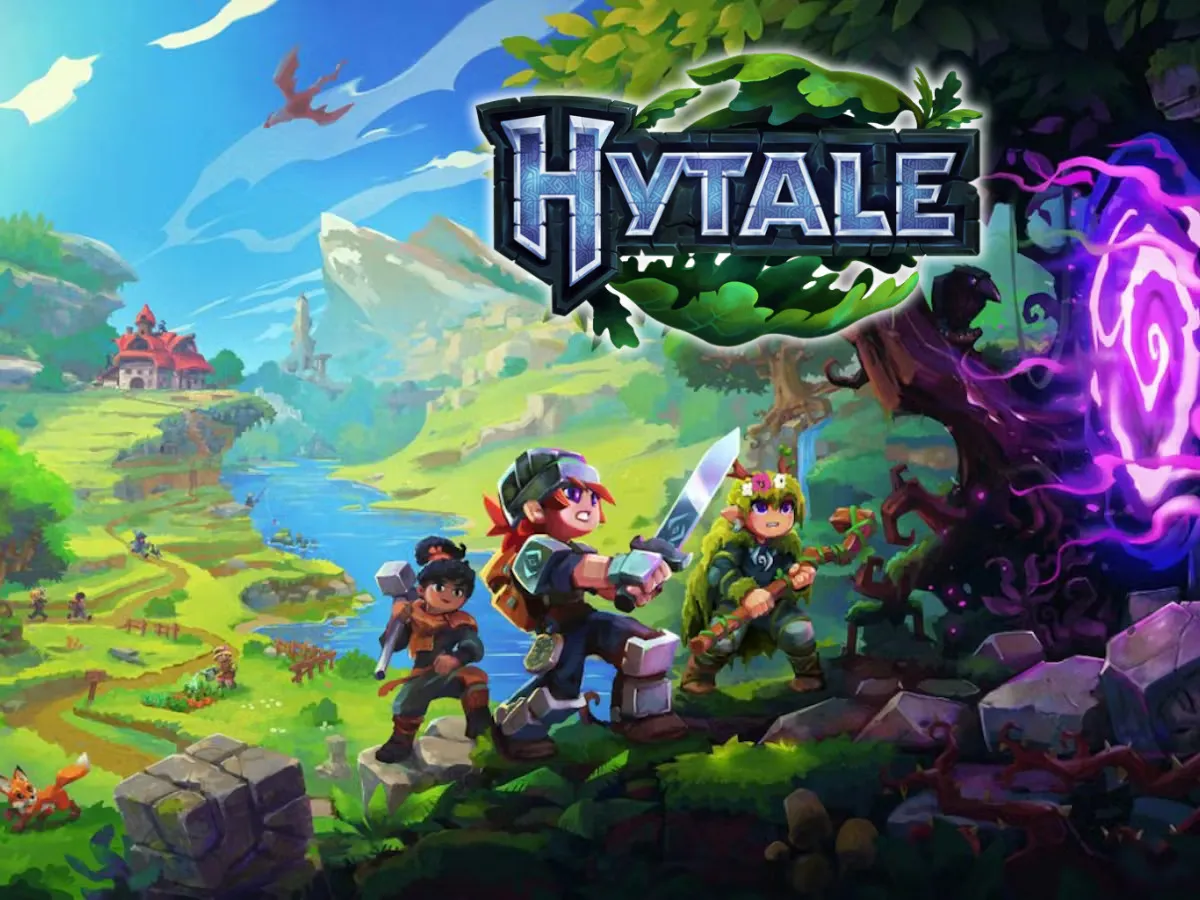
The anticipation surrounding Hytale, the upcoming sandbox RPG from Hypixel Studios, often centers on its spiritual lineage to Minecraft. However, beneath the charming voxel aesthetic lies an ambitious engine designed to solve the "procedural monotony" that plagues the sandbox genre. While most games in this category struggle to balance performance with visual diversity, Hytale’s development has focused intensely on a specific technical challenge: creating a world that feels "handcrafted" through automated, procedural systems. This article explores the deep-level architecture of Hytale’s world generation, the modularity of its engine, and how it seeks to redefine the limits of block-based environments.
The Legacy of the Voxel: Moving Beyond the Cube
To understand Hytale's innovations, one must first look at the limitations of its predecessors. Traditional voxel engines treat every block as a uniform unit, which often leads to "grid fatigue," where landscapes feel repetitive and unnatural. Hytale’s approach shifts the focus from the block to the prefab, a complex data structure that allows the engine to treat large, intricate structures as single procedural elements.
This evolution means that instead of just generating hills and valleys, the engine is calculating the relationship between lighting, biome-specific flora, and structural integrity. By treating the world as a collection of high-fidelity modules rather than a grid of single pixels, Hypixel Studios is attempting to bridge the gap between procedural generation and intentional level design.
Zone-Based Stratification: The Blueprint of Orbis
The world of Orbis, the primary setting of Hytale, is not a monolithic expanse but is divided into distinct Zones. This is a critical architectural choice that allows the engine to apply different procedural "rulesets" to specific geographic regions.
The Mathematical Hierarchy of Zones
- Zone 1 (Emerald Grove): Focuses on dense forest density and rolling hills.
- Zone 2 (Howling Sands): Prioritizes verticality through canyons and complex underground aquifers.
- Zone 3 (Borea): Manages thermal simulation and frozen water physics.
This stratification ensures that the CPU does not have to compute every possible biome rule at once. Instead, it loads specialized algorithms that govern the specific flora and fauna of that zone, allowing for much deeper complexity in localized environments without sacrificing global performance.
The Prefab Engine: The Secret to Organic Landscapes
At the heart of Hytale’s deep-world generation is the Prefab System. While a player sees a majestic ruined tower or a sprawling cave system, the engine sees a sophisticated "stamp" that can be rotated, mutated, and blended into the terrain.
Anatomy of a Hytale Prefab
- Logical Constraints: Rules defining where a structure can appear (e.g., only on a cliffside facing North).
- Loot Tables: Dynamic generation of rewards based on the player’s current progression.
- NPC Anchors: Pre-defined spots where specific AI entities will spawn to protect the location.
Unlike Minecraft’s early structures, which often felt "pasted" onto the world, Hytale’s prefabs utilize a blending algorithm. This ensures that the edges of a dungeon or a house merge seamlessly with the surrounding grass, stone, or sand, making it appear as though the building has existed there for centuries.
Verticality and the "Underground Renaissance"
For many years, sandbox games treated the "underground" as a dark, repetitive layer of stone. Hytale flips this by introducing procedural cavern layers that function as their own biomes. This requires a significant amount of computational power to ensure that "caves" aren't just empty pockets of air.
The Multi-Layered Subterranean Model
The engine generates these layers using 3D noise functions that create varying shapes:
- Crystalline Caves: Reflective surfaces and light-emitting flora.
- Fungal Forests: Organic, soft-body voxel clusters.
- Magma Chambers: Fluid dynamic simulations for lava flow.
By creating distinct layers, Hytale provides a sense of "progression through depth," where the deeper a player goes, the more the fundamental physics and lighting rules of the game change.
Real-Time Atmospheric Lighting and Shaders
A major hurdle for voxel games is the "flatness" of the world. Hytale solves this through a custom-built Atmospheric Engine that works in tandem with world generation. As the sun moves, the engine calculates volumetric lighting and "God rays" that filter through procedural tree canopies.
This isn't just a visual polish; it’s a gameplay mechanic. Shadows are calculated to affect NPC behavior, and the fog density changes based on the humidity of the current biome. The result is a world that feels alive, where a change in weather can completely shift the visual tone of a landscape you've spent hours exploring.
The "World Script" System: Dynamic Environmental Events
One of the most profound technical layers in Hytale is the World Scripting layer. This system allows the world to change after it has been generated. While traditional seeds are static, Hytale’s engine allows for "Dynamic Prefabs"—events like a meteor crash or a sudden volcanic eruption that can physically alter the voxel data in real-time.
Impact on Gameplay
- Temporary Biomes: A localized storm might turn a meadow into a swamp for a few in-game days.
- Evolving Dungeons: A cleared dungeon might be re-populated by a different faction, changing its internal layout procedurally.
This prevents the "end-game stagnation" common in the genre, ensuring that the map continues to provide new challenges long after the initial exploration phase.
Collaborative Generation: The Server-Side Power
Hytale is built with a "server-authoritative" model, meaning the complex math of world generation is often handled by the server rather than the player's hardware. This allows for massive, shared worlds that remain consistent for every player.
Technical Advantages
- Reduced Client Load: Lower-end PCs can still experience high-detail worlds because the "heavy lifting" is done remotely.
- Consistency: Every player sees the same procedural flower at the same coordinate, which is vital for competitive play and community building.
- Security: By keeping the generation logic on the server, it becomes much harder for "wall-hacks" or "x-ray" cheats to function effectively.
Moddability as a Core Engine Constraint
Most games add modding support as an afterthought; Hytale built its entire engine around it. Every procedural rule—from the height of a mountain to the color of a leaf—is accessible through a live-editing toolset.
The Hytale Model Maker (HMM)
The game integrates a browser-based modeling tool that allows creators to inject new assets directly into the world-gen pipeline. This means a modder could create a new type of tree and, within seconds, see it spawning across a thousand servers. This level of accessibility ensures that the game’s "variety" will scale exponentially with its community.
Combat-World Integration: Physics and Destructibility
In Hytale, the world is not just a backdrop; it is a tactical tool. The engine uses a physics-based approach to voxel destruction. If a player breaks the base of a tower, the upper layers don't simply float in mid-air; they are subject to gravitational calculations.
How Destruction Works
- Structural Integrity: Blocks have varying "weight" and "strength."
- Damage Types: Explosive, Blunt, and Elemental damage affect the terrain differently (e.g., fire chars wood while ice freezes water).
This adds a layer of depth to combat where players can use the environment to trap enemies or create sudden fortifications, making the world-gen a vital part of the tactical loop.
Conclusion: The Future of the Infinite Sandbox
Hytale represents more than just a "Minecraft clone"; it is an ambitious attempt to solve the fundamental limitations of procedural worlds. By combining high-fidelity prefabs, server-side authoritative generation, and a deep modding API, Hypixel Studios is building an engine that prioritizes variety and immersion above all else.
As we look toward the future of gaming, Hytale’s "Infinite Detail" approach suggests that the next generation of sandbox titles will focus less on how big the world is and more on how meaningful every single block within that world can be. The era of the "blank slate" sandbox is ending, replaced by the living, breathing, and ever-evolving world of Orbis.