





The Legend of Zelda: Breath of the Wild is widely considered a watershed moment in open-world game design. It shattered the conventions of the Zelda franchise, replacing linear dungeons and gated progression with a sprawling, systemic sandbox that rewarded player curiosity above all else. Yet, amidst the critical acclaim and the wonder of Hyrule’s vast, untamed wilderness, one design choice remains a lightning rod for debate: the weapon durability system. By forcing players to constantly discard their tools, Nintendo fundamentally altered the relationship between the player and their arsenal. This article explores the "Durability Paradox"—the tension between the game’s philosophy of resource management and the player’s desire for permanence—and examines whether this controversial mechanic is a brilliant engine for emergent gameplay or a persistent source of frustration.
1. The Design Philosophy of Scarcity
At the core of Breath of the Wild’s design is the concept of "multiplicative gameplay." Nintendo wanted to create a world where systems (fire, wind, electricity, physics) interacted in predictable ways, and where the player was forced to improvise. The weapon durability system was not an afterthought; it was a deliberate mechanism to prevent players from relying on a single, "best" solution. By ensuring that weapons would inevitably break, the developers forced players to constantly engage with the environment, scavenge, and experiment with new tools.
This philosophy stands in stark contrast to traditional RPGs, where the acquisition of a legendary sword is the ultimate goal. In Hyrule, the "Master Sword" is the exception, not the rule. The game demands that you view every item—from a rusted broadsword to a powerful Lynel crusher—as a temporary resource. This shift in perspective is the foundation of the game’s emergent combat, as it prevents the player from becoming stagnant or over-reliant on a single playstyle.
2. Breaking the "Best Weapon" Trap
In many open-world games, players quickly identify the most powerful weapon and use it for the remainder of the campaign. This trivializes combat and reduces the need to explore or adapt. Breath of the Wild effectively eliminates this "optimal strategy" by imposing a shelf life on every piece of equipment. You cannot simply hoard the best gear; you must constantly rotate your inventory.
The Psychological Impact
- Forced Variety: You are frequently forced to use weapons you wouldn't normally touch—spears, heavy two-handed clubs, or even elemental rods. This teaches the player the nuances of different combat archetypes.
- The "Hoarding" Anxiety: Paradoxically, the system often causes players to hoard their best weapons, afraid to use them for fear of breaking them. This is a common critique, as the system meant to encourage experimentation often leads to players saving their best gear for "when I really need it," which never comes.
3. The Combat Loop: Improvisation as a Mechanic
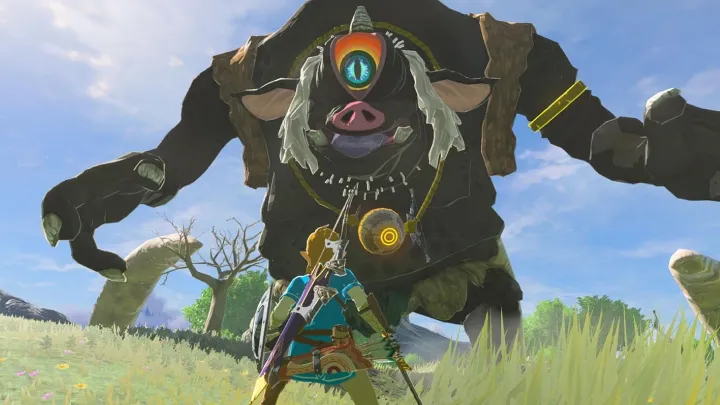
When a weapon breaks in the heat of battle, it creates a moment of high-stakes improvisation. You are forced to pause, open your inventory, and select a new tool, or perhaps switch to a different combat strategy entirely. This keeps the combat flow dynamic and prevents it from becoming a rote sequence of button presses. It forces the player to consider the environment: Can I throw this bomb? Can I use Magnesis to drop a metal box on this enemy?
This mechanic transforms combat from a simple DPS check into a puzzle. If your sword breaks, you aren't just losing damage; you are losing your primary method of engagement. This forces the player to think critically about their surroundings, utilizing the physics engine to compensate for the loss of their primary weapon. It is a brilliant way to keep the player engaged with the world’s systems, even when they are in the middle of a fight.
4. The Friction of Inventory Management
However, the durability system is not without its flaws. The primary point of friction is inventory management. As the game progresses, you gain more slots, but the constant need to manage a cluttered inventory—sorting through broken weapons, low-durability items, and new finds—can become tedious. The UI, while functional, does not always facilitate the rapid switching required by the durability system.
The "Menu-ing" Problem
- Pacing Issues: Opening the inventory mid-combat to switch weapons breaks the immersion. While it allows for tactical pauses, it can feel like a chore during intense encounters.
- The "Broken" Notification: The constant flashing of "Your weapon is badly damaged" is a source of stress that, for many, detracts from the enjoyment of the combat itself.
5. The Scarcity vs. Reward Balance
A major criticism of the system is that the rewards often don't match the cost. If you spend a powerful, high-durability weapon to defeat a difficult enemy, and the reward is a chest containing a weapon that breaks after a few hits, the sense of progression feels hollow. This creates a "negative feedback loop" where the player feels discouraged from engaging in combat because the investment exceeds the return.
The Economic Failure
- Resource Drain: High-tier enemies are essentially "resource sinks." You spend resources to kill them, and they drop resources that are often less valuable than what you spent.
- The Lack of Repair: The absence of a repair system (with the exception of the Master Sword’s recharge) means that there is no way to invest in your favorite gear. Once a cool weapon is gone, it is gone forever, which can be disheartening for players who form an attachment to specific items.
6. The Master Sword: A Compromise
The Master Sword serves as the game’s concession to players who crave permanence. It is the only weapon that "recharges" rather than breaking permanently. This is a clever design choice, as it provides a safety net for the player while still adhering to the game's core philosophy. It ensures that the player always has a reliable tool, but it is gated behind progression and cooldowns to prevent it from replacing the need for other weapons.
However, the Master Sword’s cooldown can be frustrating. When it runs out of energy, the player is forced back into the cycle of scavenging. This reinforces the game’s core loop, but it can also feel like a punishment for players who prefer a more traditional Zelda experience where the legendary blade is the ultimate, ever-present companion.
7. The Impact on Exploration
The durability system is inextricably linked to exploration. Because you are constantly losing weapons, you are constantly looking for new ones. This drives the player to explore every nook and cranny of Hyrule. You aren't just exploring for lore or collectibles; you are exploring for survival. This makes the world feel dangerous and alive.
Scavenging as Gameplay
- The "Loot" Motivation: Every enemy camp becomes a potential source of gear. This gives the player a tangible reason to engage with the world’s inhabitants, rather than just running past them.
- Environmental Cues: The system encourages players to look for weapons in the environment—a sword resting on a table in an abandoned house, or a spear held by a Bokoblin on a cliffside. It turns the entire world into a potential armory.
8. The "Breath of the Wild" vs. "Traditional Zelda" Divide
The durability system is the primary wedge between the new-school Zelda fans and the traditionalists. Traditionalists miss the sense of permanent progression—the feeling of upgrading your gear, finding a new item that unlocks new areas, and keeping that item for the rest of the game. Breath of the Wild rejects this, favoring a systemic, disposable approach.
This divide highlights the fundamental shift in Nintendo’s design goals. Breath of the Wild is a game about being in the world, whereas traditional Zelda games were about conquering the world. The durability system is the mechanism that enforces this "being" philosophy. It prevents the player from becoming a god-like figure who can ignore the world's dangers, forcing them to remain a humble traveler, constantly adapting to the challenges of the wild.
9. Potential Solutions and Future Iterations
Could the system be improved? Many players have suggested a repair system, or perhaps a way to upgrade weapon durability. Others have suggested that the "broken" notification should be less intrusive, or that inventory management should be streamlined. These are valid critiques that Tears of the Kingdom attempted to address with the "Fuse" mechanic.
The Fuse Evolution
- The Fuse Mechanic: By allowing players to attach materials to weapons, the durability system was transformed. It no longer felt like you were losing a weapon; you were losing a "base" that you could constantly rebuild and improve.
- The Shift in Perspective: This change shifted the focus from "scavenging for weapons" to "scavenging for materials." It addressed the core complaint of weapon scarcity by making every drop potentially useful, thereby turning the durability system into a creative engine rather than a restrictive one.
10. Conclusion: The Paradox Resolved
The weapon durability system in Breath of the Wild remains one of the most polarizing mechanics in modern gaming. To some, it is a tedious, immersion-breaking chore that undermines the joy of combat. To others, it is the engine that drives the game’s brilliant, systemic exploration and forces the player to engage with the world in a meaningful way.
Ultimately, the system is a success because it achieves its goal: it forces the player to play the game as it was intended—as an open-ended, improvisational adventure. While it may not be perfect, and while it certainly causes frustration, it is the mechanism that prevents Breath of the Wild from becoming just another generic open-world game. It reminds us that in the wild, nothing is permanent, and the only thing you can truly rely on is your own ingenuity. The "Fragile Blade" is not a flaw; it is the heartbeat of Hyrule.
Summary: The weapon durability system in BotW forces improvisation and exploration, acting as a polarizing but essential mechanic that drives the game's core loop.