Sonic Rumble: The Architect’s Guide to High-Velocity Battle Royale Mastery
Sonic Rumble: The Architect’s Guide to High-Velocity Battle Royale Mastery
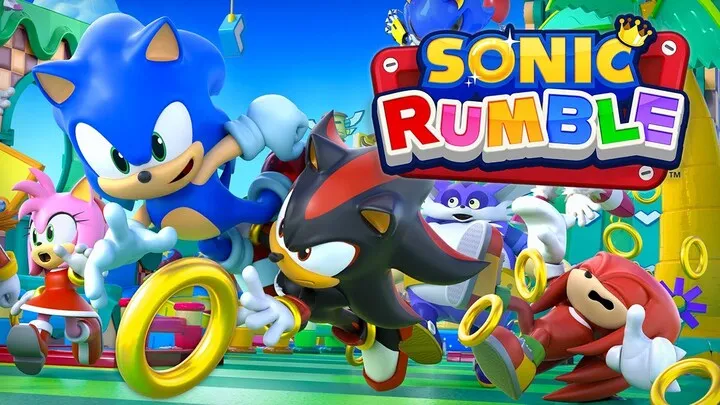
The arrival of Sonic Rumble marks a significant pivot for SEGA, moving the "blue blur" into the competitive world of massive multiplayer obstacle courses. While it may look like a simple "party game," the internal physics engine—modeled on the high-speed DNA of the Sonic franchise—introduces a layer of technical depth that standard battle royales lack. Success in Sonic Rumble isn't just about reaching the finish line; it’s about manipulating momentum, mastering frame-perfect air dashes, and understanding the distinct "Velocity Profiles" of the diverse character roster. To win consistently, a player must transition from a casual runner to a mechanical specialist who treats every slope as a battery and every enemy as a springboard.
1. The Physics of Momentum: Beyond Basic Running
At the core of Sonic Rumble is a momentum-preservation system that rewards players for maintaining their top speed through "flow." Unlike other obstacle-course games where movement speed is static, Sonic Rumble utilizes a "Traction Variable." When you run on flat ground, you have a base speed, but gravity-assisted movement on slopes can push your character beyond their standard velocity cap. The key is to avoid "Hard Landings," which occur when you fall from a great height without performing a roll or an air-dash, causing a momentary stun that kills your momentum.
To master this, players must practice the "Slope-Snap." By jumping just before an upward incline and air-dashing into the top of the curve, you can bypass the uphill deceleration that plagues novice runners. Conversely, when moving downhill, refrain from jumping; staying grounded allows the character to enter a "Rolling State," which provides a significant speed multiplier and protects you from minor projectile interference. This fundamental understanding of the terrain transforms the map from a series of obstacles into a playground of kinetic energy.

2. Character Archetypes: Analyzing the Velocity Profiles
While every character in Sonic Rumble can technically win, they are not created equal in terms of "Handling" and "Acceleration." The roster is divided into three primary archetypes: Speed, Power, and Flight. Speed types like Sonic and Shadow have the highest top-end velocity but suffer from "Drift Inertia," making tight corners difficult. Power types like Knuckles and Omega have lower acceleration but possess "Unstoppable Frames" during their dashes, allowing them to plow through obstacles that would stun other players.
Archetype Breakdown
- Speed (Sonic, Shadow, Amy): Best for wide-open race tracks. Utilize their "Insta-Shield" to maintain speed while being targeted.
- Power (Knuckles, Vector): Ideal for survival rounds. Their "Ground Pound" can clear a radius of enemies, securing a safe zone.
- Flight (Tails, Cream, Silver): Masters of shortcutting. Their vertical mobility allows them to bypass entire segments of a map, though they are highly vulnerable to mid-air projectiles.
3. The Art of the Homing Attack: Combat and Traversal Synergy
The Homing Attack is the most iconic tool in the Sonic arsenal, and in Rumble, it serves a dual purpose as both a weapon and a "Gap Closer." When the reticle appears on an enemy or a spring, pressing the action button snaps your character to that target. However, the advanced tip here is "Chain Buffering." By targeting a series of enemies or objects in quick succession, you can stay airborne indefinitely, effectively flying over hazardous floor traps or moving platforms.
Strategic Homing Tips
- Vulnerability Windows: Never Homing Attack an enemy who is currently in a "Spin-Charge" state; you will take damage and be knocked back.
- Target Switching: You can manually override the auto-reticle by tilting the movement stick toward a different target mid-flight, allowing for complex "zig-zag" navigation.
- The Bounce-Cancel: If you Homing Attack a spring, you can cancel the upward bounce with a downward air-dash to reach the ground faster, which is essential for landing on moving targets.
4. Ring Management: The Economy of Survival
Rings in Sonic Rumble act as both your health bar and your "Boost Fuel." Collecting Rings fills your "Rumble Gauge," which, when activated, triggers a super-speed state that renders you invulnerable to most stage hazards. The deep-level strategy involves "Ring-Gating." If you are at the maximum capacity (usually 20 or 30 Rings), do not pick up more. Leave them on the track as a "safety net" in case you are hit and lose your current stash.
The Rumble Gauge Calculation
The Gauge doesn't just provide speed; it modifies your character’s weight. While "Rumbling," your character becomes significantly heavier, making you immune to the "Knockback" effect of wind traps or enemy punches.
- Offensive Use: Activate your Rumble Gauge right before a congested chokepoint to bulldoze through the crowd.
- Defensive Use: Save at least 25% of your gauge to recover from a "Ring-Loss" event; the invulnerability frames during activation can prevent a second, fatal hit.
5. Shortcutting and Map Geometry: Exploiting the Terrain
Every map in Sonic Rumble has "Intended Paths" and "Master Paths." The intended path is highlighted by Ring trails and springs, but the master path often involves using "Clip-Points" or "Physics-Bypassing." For example, in the "Casino Park" themed stages, the flippers can be used to launch you into the rafters, where hidden speed boosters exist that are inaccessible from the ground.
Identifying Shortcuts
Look for "Visual Distortions" in the level boundaries. Often, a wall that looks solid may have a small ledge above it that a Flight-type character can reach. Additionally, keep an eye on "Destructible Environment" pieces. A Power-type character can punch through certain crates to reveal a literal "hole in the wall" that shaves five to ten seconds off a lap. Memorizing these shortcuts is the difference between a top-10 finish and a podium victory.
6. Itemization and Power-Up Tactics
Throughout the race, you will encounter "Item Boxes." These aren't just random luck; they are weighted based on your current position in the race. If you are in the back, you are more likely to get the "Blue Blur" (a massive speed boost) or the "Lightning Strike" (which shrinks all players ahead of you). If you are in the lead, you will mostly get "Shields" or "Mine Traps."
Optimal Power-Up Usage
- The Shield: Hold your shield until you hear the "Incoming Lock-On" sound effect. Using it too early wastes the duration.
- The Mine: Do not drop mines in open areas. Place them at the exit of "Warp Pipes" or behind "Boost Pads" where players have no time to react.
- The Magnet: This is arguably the best item for high-level play. It pulls Rings from a wide radius, allowing you to fill your Rumble Gauge without deviating from the optimal racing line.

7. Managing the "Final 8": Survival Strategy
Once the player count drops to the final eight, the game often switches from a race to a "Survival Arena." In these rounds, the floor may fall away, or the boundaries may shrink. The tip here is "Center-Point Control." Stay as close to the middle of the arena as possible. Being on the edges might seem safe, but a single "Power Dash" from an opponent can knock you into the "Void Zone" before you can recover.
Arena Tactics
- Vertical Stalling: If you play a Flight-type, use your hover ability to stay in the air while the floor disappears below.
- Aggressive Pushing: If you have the "Power" archetype, use your heavy attacks to push Speed-types toward the shrinking borders. They lack the "Weight" to resist the knockback.
- Ring Hoarding: In survival rounds, Rings respawn slowly. Prioritize Ring collection early to ensure you have a "Life" if you take a stray hit.
8. Customization and Stats: The "Toy" System
Sonic Rumble introduces a "Toy" system (customizable figurines) that allows you to tweak your character’s stats. These aren't just cosmetic. Different "Part Slots" can increase your "Air Control," "Drift Stability," or "Stun Recovery." A "Stun Recovery" build is particularly effective for newer players who find themselves hitting walls often, as it reduces the "Dizzy" animation by up to 40%.
Stat Priorities for Competitive Play
- Top Speed: High priority for racing stages.
- Acceleration: Essential for "Platforming" stages where you are frequently stopping and starting.
- Handling: The most underrated stat; high handling allows you to take corners without losing your "Traction Variable," keeping your speed high throughout the turn.
9. The Psychology of the Pack: Manipulation and Baiting

In a 32-player race, "The Pack" is a dangerous entity. If you are stuck in the middle of the crowd, the chaotic physics can toss you around like a pinball. The goal is to either "Break Away" early or "Hang Back." By hanging back slightly (around 5th or 6th place), you can avoid the initial "Homing Attack" spam and pick up the items that the leaders missed.
Baiting Techniques
You can "Bait" opponents into wasting their Rumble Gauge. By fake-dashing toward a player, you might trigger them to panic-activate their invulnerability. Once their gauge is empty, they are defenseless. Another tactic is "Jump-Baiting": jumping over a hazard and then air-dashing backward. Often, the player behind you will follow your jump but won't have the air-dash to correct their path, leading them straight into the trap.
10. Advanced Technical Skills: Frame-Perfect Recovery
The "Pro" level of Sonic Rumble involves "Recovery Frames." When you are hit and lose your rings, there is a 0.5-second window where you can "Snap-Back." By pressing the jump button exactly as your character hits the ground after being launched, you can perform a "Tech Roll." This skips the "Get-Up" animation entirely and allows you to start accelerating immediately.
The "Snap-Back" Checklist
- Audio Cue: Listen for the "Clink" of the rings hitting the ground.
- Visual Cue: Watch for your character’s shadow to align with their body.
- Input: Tap the jump and dash buttons simultaneously. If done correctly, your character will glow blue for a split second, indicating a successful "Momentum Recovery." This is the ultimate skill that separates the Grandmasters from the novices.
Conclusion
Sonic Rumble is a game of millimeters and milliseconds. Beneath the vibrant, toy-like aesthetic of its Concordia-style worlds lies a complex simulation of speed and strategy. By mastering the physics of momentum, understanding the deep nuances of character archetypes, and perfecting the technical art of the "Tech Roll," you can dominate the Origin System of this battle royale. Whether you are navigating the dizzying heights of a Sky Sanctuary-themed race or surviving a shrinking platform in a Final Arena, remember: speed is your weapon, but control is your shield. Keep your Rings high, your dashes precise, and your momentum eternal.